Best AI sales agents for B2B teams in 2026
Onwise · 10 November 2026
AI-assisted guide. Not individually reviewed by our founders.

Best for tailored sales admin: Onwise custom AI sales agents. Best for helping reps use AI themselves: hands-on sales workshops. Best for a workflow that already matches a packaged product: off-the-shelf AI sales tools. This 2026 guide compares those routes, plus general AI training, for B2B sales teams in Australia and New Zealand.
- Onwise builds custom AI sales agents for B2B teams that want to automate admin-heavy processes.
- Choose hands-on sales workshops when reps need practice with meeting preparation, CRM updates and follow-ups.
- Choose off-the-shelf tools only after checking workflow fit, permissions and approval controls.
- Keep seller judgement separate from automated drafting, data entry and forecasting preparation.
Why this matters
Choosing AI sales agents starts with a workflow decision, not a software shortlist. You need to decide what the system should do, what the seller should review and who owns exceptions.
A tool purchase and a training session solve different problems. Custom implementation addresses the process you want to automate; a workshop addresses how people use AI during their working day. Neither replaces a clear sales process.
For your 2026 plan, start with a specific task: preparing for a discovery call, updating opportunity records, drafting a follow-up or assembling forecast inputs. Keep the seller responsible for customer commitments and commercial judgement.
What makes the best AI sales agents?
Use these criteria before comparing providers. A useful demonstration should show the work being completed, including the point where a person checks it.
- Workflow fit: Does the proposed approach match your actual meeting preparation, CRM updates or follow-up process?
- Source control: Can you identify which notes, records and documents support the output?
- Approval boundaries: Which actions require seller approval, especially external messages and CRM changes?
- Exception handling: What happens when a contact, opportunity or next step is unclear?
- Team adoption: Can reps explain how to use the workflow and recognise an incorrect result?
- Ongoing ownership: Who maintains instructions, permissions and process changes after implementation?
For a 2026 evaluation, ask every provider to work through the same example. A polished demonstration of an unrelated workflow does not establish fit for your team.
Your options at a glance
These are buying routes, not four interchangeable software products. Workshops belong in the comparison because you should not commission an agent to solve a training problem.
| Option | Best for | Main distinction | Key limitation |
|---|---|---|---|
| Custom AI sales agents | Admin workflows that need tailoring | Implementation is shaped around a defined sales process | Requires process decisions and an accountable owner |
| Hands-on sales workshops | Reps who need practical AI skills | People practise applying AI to sales work | Training alone does not establish an automated workflow |
| Off-the-shelf AI sales tools | Workflows that match an existing product | You evaluate an existing feature set | Product boundaries must fit your requirements |
| General AI training | Broad AI literacy across functions | Learning extends beyond sales tasks | Sales-specific practice needs explicit inclusion |
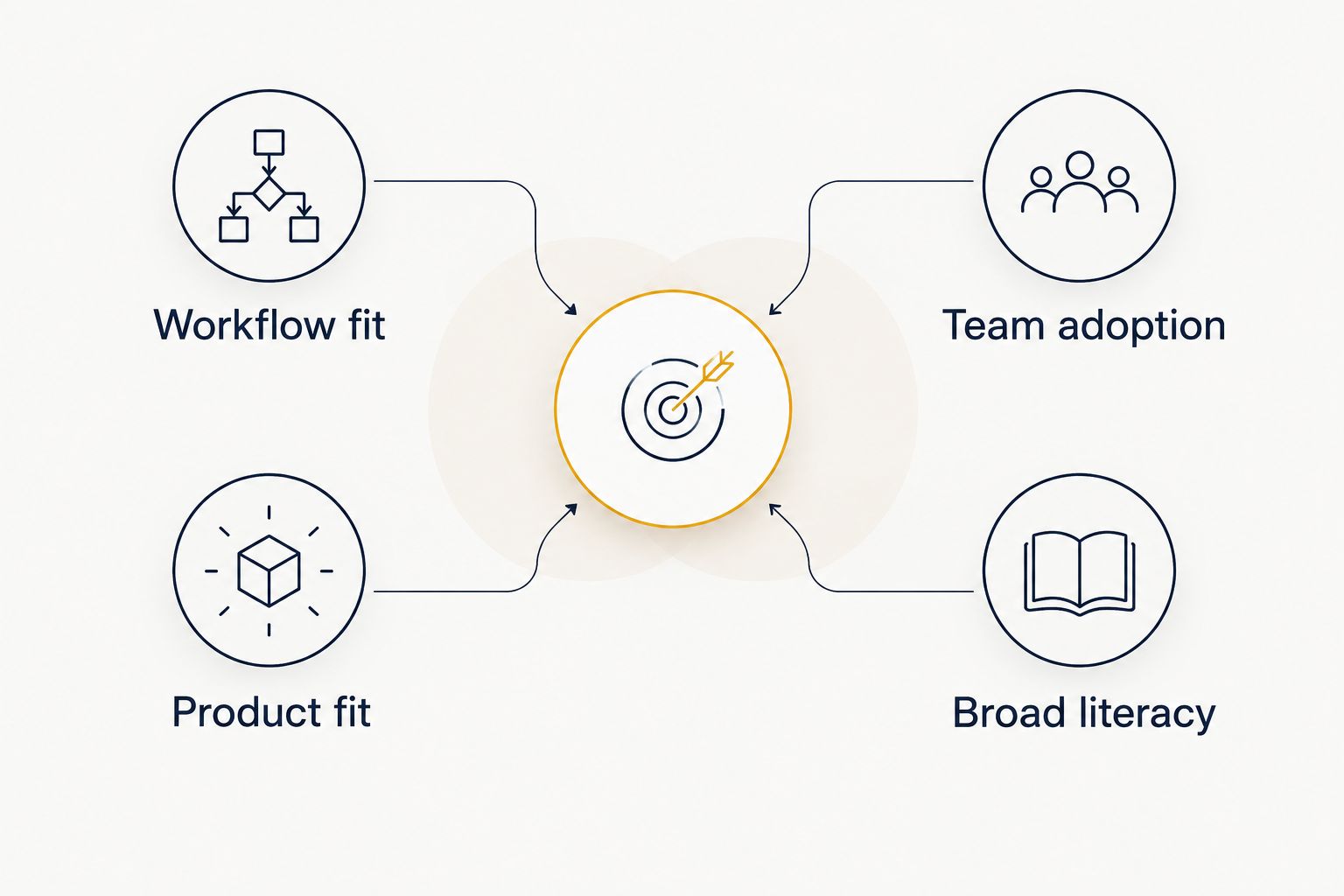
Choose between Workflow fit, Team adoption, Product fit and Broad literacy before requesting proposals. That keeps a process problem from turning into an unnecessary software purchase.
1. Onwise custom AI sales agents: best for tailored sales admin
Onwise offers custom AI sales agents for B2B sales teams in ANZ. Its stated focus is automating admin-heavy processes so sellers can focus on selling.
Onwise is best for B2B teams seeking custom AI sales agents for admin-heavy workflows. Treat implementation as a scoped service, not an assumption that a ready-made product already covers every requirement.
What to put in the implementation brief
Choose a bounded workflow. For CRM updates, specify the source notes, destination fields, required approval and behaviour when information is missing. For meeting preparation, define which account information belongs in the brief and how the seller checks its accuracy.
Follow-ups need a separate boundary: distinguish drafting a message from sending it. Forecasting needs the same care. Preparing evidence for a forecast discussion is different from deciding whether an opportunity will close.
Custom AI sales agents pros:
- You can define the intended workflow before commissioning implementation.
- You can put approval requirements into the brief.
- You can focus the project on a concrete sales-admin problem.
Custom AI sales agents cons:
- Your team still needs to explain the process and resolve conflicting rules.
- Implementation does not remove the need for user training or ongoing ownership.
- Required integrations and controls need confirmation during scoping.
Best for: Sales leaders who can name a recurring admin task and assign someone to own its implementation.
For a useful discovery conversation, bring a redacted example of the work, its current steps and the result you want. Ask what would be automated, what would remain manual and how exceptions would reach a person.
Verdict: Buy tailored implementation when your workflow needs tailoring and your team can own the process.
2. Onwise hands-on sales workshops: best for rep-led AI adoption
Onwise also offers hands-on AI workshops for sales teams. This is the route to assess when sellers need practical experience rather than another system working behind the scenes.
A workshop is not an AI sales agent. Its purpose in this shortlist is to help you decide whether the immediate problem is automation or the team's ability to use AI well.
What to put in the workshop brief
Ask for exercises based on sales work. Meeting preparation should involve checking account context and identifying unanswered questions. CRM practice should separate confirmed facts from assumptions. Follow-up practice should preserve the commitments made during the conversation.
If your team uses Claude, request practice with the daily tasks reps actually perform. Ask participants to draft a meeting brief, review a follow-up and identify an unsupported statement. Confirm the agreed workshop content before booking; do not assume a particular tool or exercise is included.
Hands-on sales workshops pros:
- Reps can practise the judgement needed to review AI-generated work.
- Sales examples make the learning directly relevant to daily tasks.
- Workshop exercises can help reveal which processes need clearer instructions.
Hands-on sales workshops cons:
- Learning a task does not make that task run automatically.
- Managers need to reinforce agreed practices after the session.
- A workshop cannot settle unresolved data-access or process-ownership decisions by itself.
Best for: Teams whose sellers need a repeatable way to use AI for preparation, CRM notes and follow-ups.
Give workshop planning the same attention as implementation planning. Define the task participants should complete afterwards, the material they can safely use and the checks they must perform before accepting an output.
Verdict: Buy a sales-specific workshop when the immediate gap is practical skill, not missing automation.
3. Off-the-shelf AI sales tools: best for an existing workflow match
An off-the-shelf tool gives you an existing product to evaluate. The question is whether its documented behaviour matches your requirements without changing the sales process in ways you do not want.
Do not treat a category label as proof of capability. Check the individual product's supported systems, permissions, review controls and handling of incomplete information.
What to test before committing
Use a redacted example from your own pipeline. Ask the provider to show the full path from input to output, including failure handling. For CRM work, inspect the proposed field changes rather than accepting a summary that says the record was updated.
For follow-ups, check whether the system drafts, queues or sends messages. Those are different levels of authority. For meeting preparation, check whether the seller can trace a statement back to its source.
Off-the-shelf AI sales tools pros:
- You can compare an existing feature set against a written checklist.
- A demonstrated workflow gives the team something concrete to assess.
- A close product match can remove the need to specify every behaviour from scratch.
Off-the-shelf AI sales tools cons:
- A required workflow can fall outside the product's supported boundaries.
- Configuration does not necessarily provide the control your process needs.
- Product adoption still requires training and a responsible internal owner.
Best for: Teams whose requirements closely match a product's verified capabilities.
Verdict: Hold until the product demonstrates your workflow, approval boundaries and exception handling.
4. General AI training: best for broad workplace literacy
General AI training addresses wider workplace use rather than a particular sales workflow. Assess it when multiple functions need a shared understanding of instructions, output review and acceptable use.
It is not a substitute for an agent implementation. It is also not automatically a substitute for sales-specific practice. The syllabus determines whether it covers the work your reps need to perform.
What to check in the syllabus
Look for exercises that require participants to check outputs, not just generate them. If sales outcomes are the priority, ask where meeting preparation, opportunity notes, follow-ups and forecasting preparation appear.
A session can be useful without addressing every sales task. Buy it for its stated purpose rather than expecting a broad introduction to resolve a specific CRM workflow.
General AI training pros:
- It provides a route for discussing AI use across business functions.
- It can establish shared language for instructions and output review.
- It suits a brief that extends beyond sales.
General AI training cons:
- Sales-specific exercises need to be confirmed in the syllabus.
- Broad coverage leaves less room for individual workflow practice.
- Training does not itself configure systems or automate admin.
Best for: Organisations prioritising foundational learning across several functions.
Verdict: Skip as the sole answer to a defined sales-admin problem; buy it for a broader learning objective.
How these options are ranked
The order prioritises fit with the stated problem: reducing admin for B2B sellers. Custom implementation comes first for tailored automation, followed by sales workshops for practical adoption. Packaged tools depend on demonstrated product fit; general training serves a broader objective.
This is a decision framework for 2026, not a claim that providers have been tested against one another. Change the order when your need changes. If reps need help reviewing drafts, start with training rather than commissioning an agent.
Which route should you choose?
Choose custom agents for a defined process you want automated. Choose sales workshops for work sellers need to perform and check themselves. Evaluate an off-the-shelf tool when you can demonstrate a close match between its capabilities and your requirements.
Use this practical acceptance exercise before signing off on your 2026 plan:
- Review 10 recent meetings: Identify the information sellers needed and the admin created afterwards.
- Select 5 CRM fields: Define acceptable entries, source evidence and who approves changes.
- Check 3 follow-up drafts: Look for invented commitments, missing next steps and inaccurate summaries.
These are suggested review samples, not performance benchmarks. Apply the same examples to an implementation proposal and a workshop brief. The results help separate a workflow-design problem from a skills problem.
Bring that brief to a discovery call. Ask which work belongs in custom implementation, which belongs in hands-on training and which should remain with the seller.
Discuss your sales admin workflow
Bring a CRM update, meeting preparation or follow-up example to a discovery call.
FAQ
What are the best AI sales agents for B2B teams?
The best AI sales agents fit a defined sales workflow and have clear approval boundaries. Assess custom implementation when your process needs tailoring, and packaged tools when their demonstrated capabilities match your requirements.
Is Onwise a software product or a service?
Onwise provides custom AI sales agents and hands-on AI workshops for sales teams. Assess it as a service for implementation and practical learning, rather than assuming it is an off-the-shelf software subscription.
Should we choose custom AI sales agents or an off-the-shelf tool?
Choose custom implementation for requirements that need tailoring; assess an off-the-shelf tool when its existing capabilities match the workflow. Confirm integrations, approval controls and exception handling before deciding.
Can AI sales agents update our CRM automatically?
Automatic CRM updates depend on the specific implementation, permissions and supported system. Require a demonstration of the proposed field changes, approval process and response to incomplete notes before authorising write access.
Should sales reps use Claude for meeting preparation and follow-ups?
Assess Claude against a defined task using approved information and seller review. Start with a meeting brief or follow-up draft, then check factual accuracy, customer commitments and compliance with your internal rules.
Is a sales AI workshop better than general AI training?
A sales-specific workshop is the closer fit when the objective is practice with sales tasks. General AI training fits a broader learning brief; inspect the syllabus rather than assuming either option includes your required exercises.
Can AI sales agents replace forecast judgement?
Keep forecast judgement with the accountable sales leader. Scope automation around gathering evidence, preparing summaries and flagging missing information rather than treating generated confidence as a commercial decision.
One last thing
An incomplete source should produce a visible gap, not an invented answer. Put a meeting note with no agreed next step into your evaluation. Check whether the proposed workflow flags the omission or manufactures a commitment.
That small test gives you a concrete discussion about review, escalation and trust before you expand the scope.